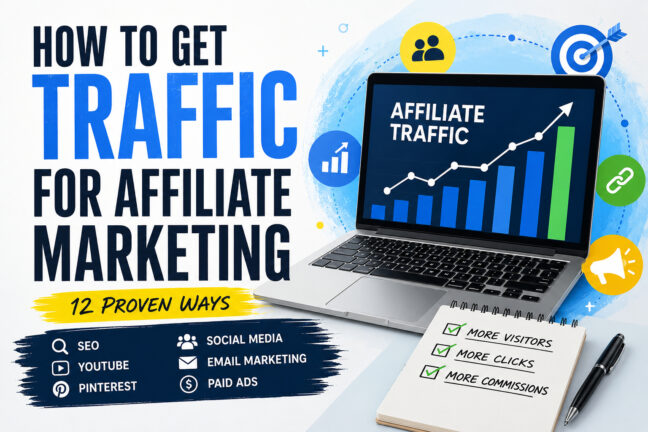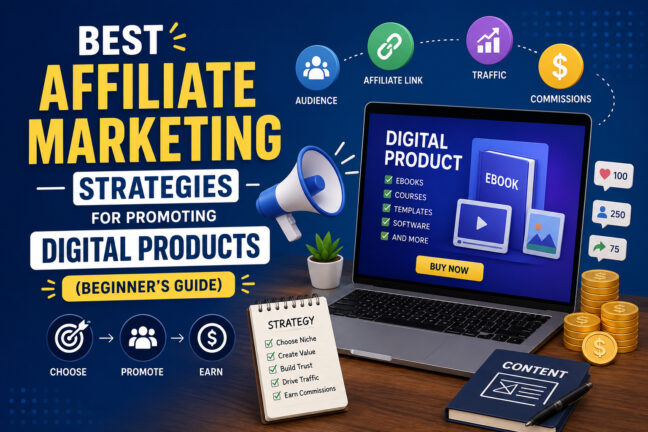
Short answer: yes — people do make money with affiliate marketing. Real answer: it takes time, work, and the right choices. This guide explains how affiliate earnings are generated, typical income ranges, the skills and channels that matter, common pitfalls, and a realistic step-by-step plan to build a sustainable income.
How affiliate marketing actually works (quick overview)
Affiliate marketing means you recommend someone else’s product or service and earn a commission when a reader/viewer buys or completes a tracked action. Commissions vary by product: it could be a fixed amount, a percentage of the sale, or recurring payment for subscriptions.
Can you really make money with affiliate marketing?
Yes — but “make money” covers a wide range. Some people earn a small side income, others replace their salary, and a minority reach high six- or seven-figure affiliate businesses. Your results depend on multiple factors: traffic quality and volume, conversion rates, niche, product commissions, and how effectively you turn visitors into buyers.
Typical income ranges (realistic expectations)
- Beginners (0–6 months): $0–$500 per month. Most beginners earn little or nothing while building content, traffic, and systems.
- Part-time affiliates (6–18 months): $200–$3,000 per month. With consistent content and basic SEO or social growth, this is a common range.
- Full-time affiliates (1–3 years): $3,000–$30,000 per month. Achievable with focused niche selection, diversified channels, and optimization.
- Top/“super” affiliates: $30,000+ per month. These are experienced teams or creators who scale paid traffic, own large audiences, or promote high-ticket products.
These ranges are illustrative — many people fall between tiers or fluctuate month to month.
What determines how much you’ll earn?
- Traffic source and volume: More consistent, relevant traffic = more conversion opportunities. Organic search and email tend to convert best for affiliate offers.
- Niche selection: Some niches have higher purchase intent and larger commissions (software, finance, health, high-ticket products). Low-competition, niche-specific markets can be easier to rank in.
- Conversion rate: Quality content, trust, and strong calls-to-action improve the percentage of visitors who click affiliate links and buy.
- Average order value & commission: A 5% commission on a $1,000 product beats a 50% commission on a $10 product in raw dollars.
- Offer type: Digital products and software often offer higher commissions and recurring payouts; physical products near-purchase intent but lower commissions.
- Platform & audience: An email list or a YouTube channel with engaged followers usually converts better than cold social traffic.
How long before you see meaningful income?
Expect months, not weeks. A reasonable timeline:
- 0–3 months: Setup: niche selection, website or channel creation, first batch of content, basic SEO or channel optimization.
- 3–9 months: Traffic growth from organic search or social. Some sales start to appear if content targets buyer intent.
- 9–18 months: If you keep publishing and optimizing, you’ll likely see more consistent income. This is often when part-time income becomes meaningful.
- 12+ months: Scaling and diversification (email funnels, paid ads, additional products) can move you toward full-time earnings.
Many variables accelerate or slow this timeline—consistent publishing, niche competitiveness, and whether you use paid traffic are big ones.
Common channels and business models
Content-driven (blogs and SEO)
- Pros: low upfront cost, compounding traffic, long-term value.
- Cons: slower to start; requires SEO and writing skills.
Video (YouTube, short-form)
- Pros: high engagement, trust-building, good for demonstrations and reviews.
- Cons: production time and consistency required; discoverability can be volatile on short-form platforms.
Email marketing
- Pros: direct line to engaged subscribers, excellent for recurring revenue and higher conversions.
- Cons: requires list building and deliverability best practices.
Paid traffic
- Pros: fast traction if you have the margins and ad skills.
- Cons: expensive and risky without strong funnels and conversion data.
Social platforms and influencers
- Pros: quick audience building; good for impulse buys and brand partnerships.
- Cons: algorithm risk and lower lifetime value if audience is not owned.
Costs and investment
- Low-budget path: $50–$300/year for hosting, domain, theme, and essential tools if you bootstrap a blog and create content yourself.
- Mid-budget: $300–$2,000/year for premium tools, freelance content, and basic ad experiments.
- Scaling with paid ads: $1,000+ per month in ad spend, plus creative, landing pages, and testing.
The main investment is time: content creation, learning SEO, video production, or ad optimization. If you can write and produce content yourself, cash outlay can be minimal.
Skills you should focus on
- Copywriting and persuasive content
- SEO fundamentals and keyword research
- Basic analytics and conversion tracking
- Content production (writing, video, or audio)
- Funnel building and email marketing
Ethics, disclosures, and legal basics
Always disclose affiliate relationships where required. The FTC expects clear, conspicuous disclosures near affiliate links. Honesty builds long-term trust — promoting low-quality products may give short-term commissions but damages reputation and conversions over time.
Common mistakes to avoid
- Chasing every shiny product or program instead of focusing on one niche and audience.
- Promoting poor-quality offers that hurt your credibility.
- Ignoring analytics — you can’t improve what you don’t measure.
- Relying on a single traffic source (one algorithm change can sink you).
- Expecting overnight success and quitting too soon.
Practical strategies to increase affiliate income
- Pick the right niche: combine passion with commercial intent and manageable competition.
- Create content for buyer intent: product comparisons, reviews, and buyer’s guides convert better than broad informational posts.
- Build an email list: own that audience to increase lifetime conversions and promote new offers.
- Promote recurring commissions: SaaS and subscription services pay month after month while you keep sending traffic.
- Diversify programs: don’t depend on one affiliate program or network.
- Optimize landing pages and funnels: test headlines, CTAs, and placement of links to bump conversion rates.
- Leverage gated content and lead magnets: use checklists, templates, or mini-courses to capture emails.
A realistic 12-month plan (simple, actionable)
- Month 1: Foundation — Choose niche, set up a website or channel, sign up for relevant affiliate programs, and publish 5–10 high-quality pieces targeting buyer intent.
- Months 2–4: Traffic — Publish consistent content, do on-page SEO, start building an email list, and promote content on social platforms.
- Months 5–8: Optimize — Analyze which pages convert, improve those pages, add comparison/review posts, and implement basic funnels.
- Months 9–12: Scale — Double down on winning content types, experiment with paid traffic if margins allow, and diversify into new related keywords and platforms.
When paid ads make sense
Paid ads are useful when you have a proven funnel and positive unit economics (cost per acquisition lower than expected affiliate payout). Don’t start spending on ads before you know which pages and offers convert organically.
Who should try affiliate marketing — and who should skip it
- Try it if: you can produce content consistently, enjoy learning SEO or video creation, and are patient for long-term returns.
- Skip or delay it if: you need immediate income, refuse to learn basic marketing skills, or expect instant riches without effort.
Bottom line: is affiliate marketing a viable income source?
Yes — affiliate marketing is a viable path to side income or full-time revenue for many people. It isn’t a shortcut: success requires strategic niche selection, consistent content, trust with your audience, and attention to metrics. If you treat it like a real business (test offers, track conversions, and reinvest profits), affiliate marketing can scale. If you treat it like a hobby with occasional posts, expect hobby-level returns.
If you’re ready to start: pick a niche with clear buyer intent, create a handful of high-quality, conversion-focused pieces, and build an email list. Track everything, double down on what works, and be patient — compounding content and trust are what turn small affiliate checks into dependable income.
More from The Affiliate Digest
-
Tube Claw AI review: Features, pricing, is it legit or a scam?
Tube Claw AI promises an all-in-one AI toolkit for faceless YouTube channels: scripts, voices, avatars, SEO and uploads.…
-
Brett Rutecky’s Affiliate Store Review
Affiliate Store is a low-cost, no-code AI assistant for creating a simple affiliate storefront. It can generate product…
-
How to Get Traffic for Affiliate Marketing: A Beginner’s Step‑by‑Step Guide
Practical, step-by-step methods to get targeted traffic for affiliate marketing — free and paid options, SEO and content…
-
Aigency Valet Review — What Joshua Zamora’s Service Promises and Who It’s Best For
Aigency Valet is a marketing/agency support product marketed by Joshua Zamora that promises systems and assets to help…
-
Vidicom review: AI product videos for e-commerce (2026)
Vidicom is an AI video generator that creates studio-style product videos from a product URL. It’s designed for…