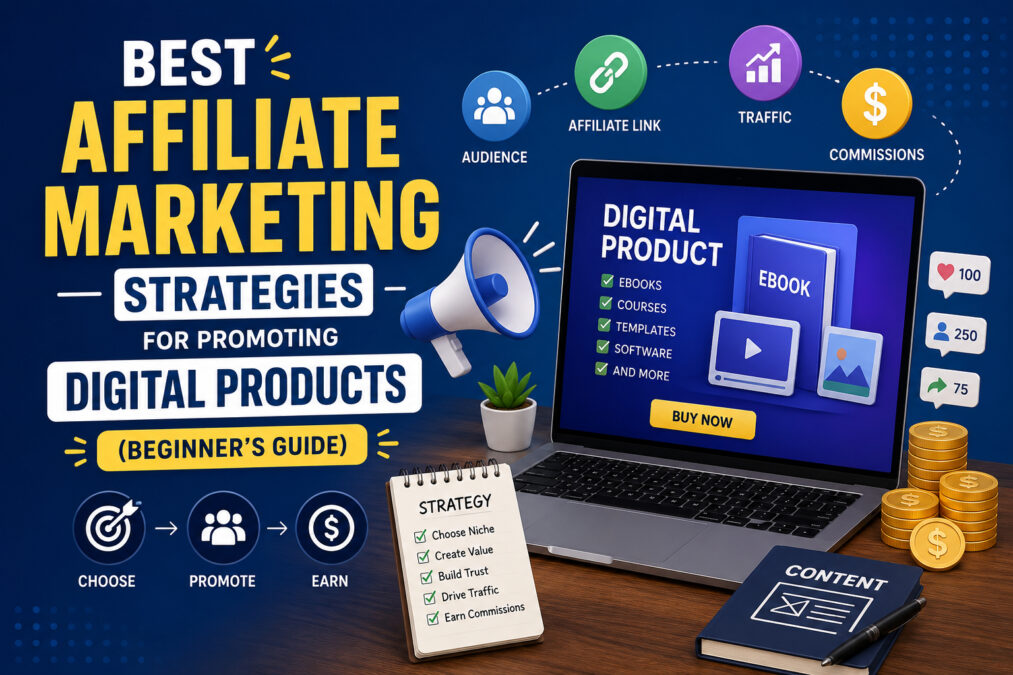
- Top strategies: content SEO, email marketing, reviews/comparisons, paid ads, webinars/partnerships, and conversion optimization.
- Focus on buyer intent content + tracking metrics (CTR, conversion rate, LTV).
- Start with a content funnel and one traffic channel, then scale.
Direct Answer
The best affiliate marketing strategies for promoting digital products are: content-focused SEO (reviews, how-to guides, and problem-solution pages), targeted email funnels and lead magnets, high-value bonuses and conversion-focused landing pages, product comparison/review content, paid acquisition with tight tracking, and creator partnerships (webinars, podcasts, co-promos). Use one primary channel to start, measure conversion metrics, and iterate on the offer and funnel.
What This Means
“Digital products” include online courses, SaaS, ebooks, templates, and memberships. These are sold and delivered electronically, so the purchase decision often depends on perceived value, trust, and immediacy. The strategies above prioritize reaching buyers at different stages—awareness (SEO, social), consideration (reviews, comparisons, webinars), and conversion (email nurture, landing pages, bonuses)—and focus on measurable channels you can optimize.
How It Works
Affiliate marketing for digital products follows a predictable funnel:
- Attract targeted traffic (SEO content, paid ads, creators).
- Capture interest (lead magnets, email signups, product reviews).
- Nurture and demonstrate value (email sequences, case studies, demos).
- Convert with clear CTAs, bonuses, and optimized checkout flow.
- Measure and scale what works (conversion rate, ROAS, LTV).
Because digital products can often be tried or consumed quickly, you can shorten the sales cycle with demos, free trials, or immediate downloadable bonuses—making conversion optimization and messaging crucial.
Step-by-Step Guide
1. Choose the right digital products and offers
- Pick products with clear benefits, good conversion tracking (affiliate dashboards), and at least decent EPC (earnings per click).
- Prefer vendors offering reliable payouts, a trial or money-back policy, and promotional assets (banners, demo accounts, sample content).
2. Map buyer intent and create content for each stage
- Awareness: write problem-focused posts (“how to streamline X”, “why X fails”).
- Consideration: create comparison and in-depth review pages that show pros/cons and use cases.
- Conversion: publish product tutorials, bonus pages, and landing pages with clear CTAs.
3. Build an email funnel tied to content
- Offer a relevant lead magnet (checklist, mini-course, template) in exchange for email.
- Create a short nurture sequence: welcome → value → social proof → product pitch + bonus → final reminder.
- Personalize link placement and use UTM parameters to track which content drove signups and sales.
4. Use high-value bonuses and scarcity ethically
- Bonuses should be genuinely useful (course add-ons, templates, live Q&A) and closely related to the product.
- Time-limited bonuses or limited seats for webinars increase urgency without misleading buyers.
5. Run targeted paid ads with tight tracking
- Test small budgets on platforms where the audience hangs out (Facebook/Meta for creators and course buyers, Google Search for intent queries, LinkedIn for B2B SaaS).
- Send traffic to a landing page or content page, not directly to the affiliate link, unless the program allows and it converts well.
- Track conversions, cost per acquisition (CPA), and return on ad spend (ROAS).
6. Leverage creator partnerships and webinars
- Host or sponsor webinars with experts that demo the product and include exclusive affiliate bonuses.
- Partner with podcasters, YouTubers, or niche newsletter authors for authentic exposure.
7. Optimize the post-click experience
- Use landing pages that match your ad or content messaging and remove distractions.
- Test headline, CTA copy, placement of bonuses, and length of form fields.
- Ensure mobile checkout works smoothly—many buyers use phones for digital purchases.
8. Track, analyze, and scale
- Key metrics to track: click-through rate (CTR), conversion rate, earnings per click (EPC), cost per acquisition (CPA), and lifetime value (LTV) of referred customers.
- Double down on content and channels with positive ROI; pause or rework low performers.
- Create 1 pillar content page (review or how-to) and one lead magnet.
- Set up an email sequence of 4–6 messages that includes a product pitch and bonus.
- Run a small paid test (eg. $100) to validate a landing page.
Common Mistakes
- Promoting low-quality products for high commissions — damages list trust and reduces long-term revenue.
- Sending cold traffic directly to affiliate links without building context or an email list.
- Using generic bonuses that don’t add real value or match buyer needs.
- Ignoring tracking — no data means you can’t optimize campaigns or scale profitably.
- Spreading effort across too many products or channels before validating one approach.
Pros and Cons of Top Strategies
Content-First SEO
- Pros: Sustainable, builds authority, lower long-term cost per acquisition.
- Cons: Slower to scale; requires consistent publishing and SEO work.
Email Marketing & Funnels
- Pros: High conversion potential, repeatable sales, own the audience.
- Cons: Requires list-building and sequence optimization; deliverability matters.
Paid Ads
- Pros: Fast testing and scaling, targeted traffic, predictable costs when optimized.
- Cons: Can be expensive for competitive keywords; needs good tracking and landing pages.
Recommended Next Steps
- Pick one product and one primary channel (content SEO or paid ads) to test for 4–8 weeks.
- Create a high-value lead magnet tied to that product and a 4–6 email nurture sequence.
- Publish a conversion-focused page (review/comparison/tutorial) and A/B test the headline and CTA.
- Run a small ad test (if budget allows) or promote the page via a micro-influencer or niche community.
- Track CTR, conversion rate, EPC, and CPA weekly; double down on tactics that meet your targets.
FAQ
What’s the best content type for promoting digital products?
Start with product reviews, comparison pages, and problem-solution posts. These match buyer intent and work well with lead magnets and email funnels.
How much should I spend on paid ads to test an affiliate offer?
Begin with a conservative test budget — $50–$200 per channel over 1–2 weeks — to validate conversion rate and CPA before scaling.
Are bonuses necessary for promoting digital products?
Not always, but bonuses help increase perceived value and conversion rates. Use relevant, useful bonuses (templates, private Q&A, mini-courses) rather than generic add-ons.
How do I choose between SEO and paid traffic?
If you have time and limited budget, focus on SEO and email. If you need faster validation and have testing budget, use paid ads with strict tracking. The ideal approach combines both: use paid for quick tests and SEO for long-term growth.
What metrics should I monitor first?
Track clicks, conversion rate (visitor → lead and visitor → sale), EPC, CPA, and ROI/ROAS. For recurring products, monitor customer lifetime value (LTV).
Affiliate Disclosure
This guide explains proven affiliate marketing strategies. Some links or resources mentioned on our site may be affiliate-linked, which can earn us a commission at no extra cost to you. We only recommend products and programs we consider valuable for the intended audience. Always check vendor terms and perform your own due diligence.
Who should use these strategies: beginners who want a clear path (start with content + email), creators and bloggers seeking passive revenue, and performance marketers testing paid funnels. Who should avoid them: affiliates with no willingness to track results, or those seeking instant, risk-free profits—affiliate marketing requires work, testing, and time.
- Start with one product and one channel. Build a content page + lead magnet, run a small paid test, and use email to convert.
- Measure CTR, conversion rate, EPC, and CPA, then scale what works.
More from The Affiliate Digest
-
Tube Claw AI review: Features, pricing, is it legit or a scam?
Tube Claw AI promises an all-in-one AI toolkit for faceless YouTube channels: scripts, voices, avatars, SEO and uploads.…
-
Brett Rutecky’s Affiliate Store Review
Affiliate Store is a low-cost, no-code AI assistant for creating a simple affiliate storefront. It can generate product…
-
How to Get Traffic for Affiliate Marketing: A Beginner’s Step‑by‑Step Guide
Practical, step-by-step methods to get targeted traffic for affiliate marketing — free and paid options, SEO and content…
-
Aigency Valet Review — What Joshua Zamora’s Service Promises and Who It’s Best For
Aigency Valet is a marketing/agency support product marketed by Joshua Zamora that promises systems and assets to help…
-
Vidicom review: AI product videos for e-commerce (2026)
Vidicom is an AI video generator that creates studio-style product videos from a product URL. It’s designed for…