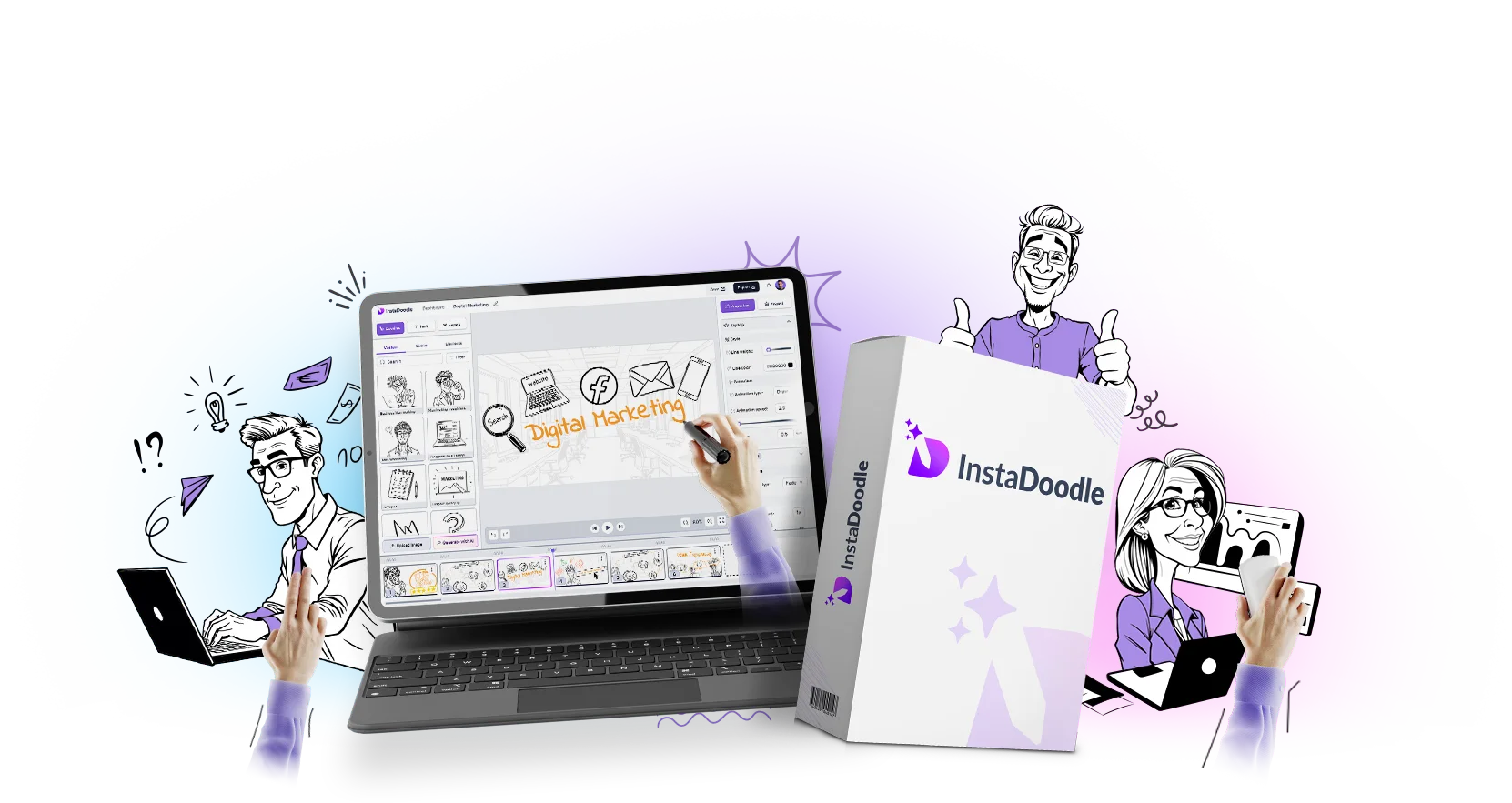
This review answers one question directly: What does InstaDoodle do, and is it worth using if you’re a beginner who wants quick doodle-style animated videos? Below you’ll find a clear explanation of the tool, a step-by-step look at how it works, the main pros and cons, real-world uses, and a no-nonsense recommendation.
What does InstaDoodle do?
InstaDoodle is an AI-assisted video tool that converts text prompts and simple images into short, doodle-style animated videos. It automates the process of creating whiteboard or hand-drawn animation clips by generating illustrations, sequencing them, and applying basic motion and timing—so creators can produce social-ready videos without advanced animation skills.
Core capabilities
- AI-guided illustration: Generates sketchy, doodle-style frames from text or supplied images.
- Automatic animation: Applies simple motion, transitions, and sequencing to make the drawings feel animated.
- Text-to-video workflow: Turn a script or bullet points into a timed sequence with on-screen doodles and captions.
- Audio options: Supports voiceover uploads and typically includes basic text-to-speech as an option.
- Export formats: Produces short MP4 clips sized for social platforms (stories, reels, shorts).
Put simply: InstaDoodle accelerates the creation of short, hand-drawn-style explainer or promo clips by removing the need to draw or animate manually.
How InstaDoodle works (step-by-step)
- Start with a script or prompt. You paste a short script, list of talking points, or a prompt describing the scene you want.
- Choose a style or template. Select doodle styles, pacing presets, and aspect ratio (square, portrait, landscape).
- Generate assets. The AI creates sketch frames based on your text or imports your uploaded images and converts them into doodle artwork.
- Add audio. Upload a voiceover or use built-in text-to-speech. Sync the audio to the generated scenes.
- Preview and tweak. Make small edits like reordering scenes, changing captions, or adjusting timing.
- Export. Render the final video and download it in a social-ready format.
Who InstaDoodle is best for
- Social creators: Anyone who needs quick, eye-catching short videos for Reels, TikTok, or Stories without learning animation.
- Small business owners: Owners who want simple explainer clips for product highlights, promotions, or micro-ads.
- Educators and coaches: People who want quick teaching visuals and short lesson clips.
- Marketers on a budget: Teams that need basic animated content fast and at lower cost than custom animation.
If you’re a professional animator, video agency, or need complex character animation, InstaDoodle is likely too limited. It’s designed around speed and simplicity, not frame-by-frame control.
Strengths — what InstaDoodle does well
- Speed: You can put together a short doodle video in minutes rather than hours or days.
- Beginner-friendly: The workflow is template-driven and doesn’t require animation knowledge.
- Consistent visual style: Outputs maintain a unified doodle look that works for casual brands and educational content.
- Low production overhead: No actors, cameras, or detailed editing—good for solo creators and small teams.
- Optimized for social: Common aspect ratios and short durations are baked into the workflow.
Limitations and tradeoffs
- Limited customization: You won’t get fine-grained control over motion paths, timing of individual strokes, or advanced compositing.
- AI artifacts: Generated doodles can sometimes look odd or lose detail, especially on complex prompts.
- Voice quality varies: Built-in text-to-speech is convenient but may sound synthetic unless you use your own recorded voiceover.
- Template-driven output: Videos can begin to look similar across different users unless you invest time in customizing text and prompts.
- Licensing and usage: Confirm commercial use rights and asset ownership—lower tiers of similar tools sometimes impose restrictions or include watermarks.
How good are the results for beginners?
For beginners, InstaDoodle’s value is straightforward: it removes most technical barriers to creating doodle-style animated clips. The output quality is usually good enough for social posts, quick explainers, and promotional snippets. Expect a tradeoff between time saved and control—if you need highly polished, brand-accurate animations, a designer or a higher-end animation tool is still necessary.
Practical tips to get better videos with InstaDoodle
- Write concise scripts: Short, clear sentences translate better into scene-by-scene doodles and avoid clutter.
- Use your own voice: Record a simple voiceover if possible—syncing your voice yields more natural pacing and reduces reliance on synthetic TTS.
- Start with templates: Use presets for pacing and aspect ratio to match your intended platform.
- Refine prompts: If the AI misrepresents an object, try simplifying the prompt or providing a reference image.
- Download high-quality assets: Export the highest resolution available if you plan to repurpose clips across platforms.
Comparisons and alternatives
If you’re deciding whether InstaDoodle is the right pick, compare it to these options:
- Whiteboard animation services: Manual whiteboard services and freelancers deliver more polished, customized work but cost more and take longer.
- General AI video makers: Broader AI video platforms may offer more templates and stock footage, but they might not focus on the doodle look specifically.
- DIY animation software: Tools like simple timeline editors let you animate assets with more control but require learning basic animation concepts.
InstaDoodle fits when speed and a recognizable doodle aesthetic are higher priorities than full customization or studio-level polish.
Pricing and tiers — what to expect
Pricing models for tools like InstaDoodle typically include a free tier or trial with limited exports and watermarks, plus monthly or annual subscriptions that unlock higher-resolution exports, more monthly renders, and commercial licensing. Check current pricing and any trial options before committing so you know if the included export limits and usage rights meet your needs.
Common questions (brief FAQ)
Can InstaDoodle turn a blog post into a video?
Yes—by extracting key points or summarizing the post into short sentences you can convert those into scenes. Keep each scene focused to avoid overcrowding.
Does InstaDoodle support voiceover uploads?
Most tools in this category let you upload recorded voiceovers and sync them to the generated scenes. Using your own audio usually gives the best pacing.
Are videos suitable for commercial use?
That depends on the license in your subscription tier. Always check the terms of service for commercial usage rights and whether assets are royalty-free.
How long are the videos?
These tools are optimized for short-form content—typically 15–90 seconds—though some platforms allow longer exports depending on your plan.
Final verdict — honest recommendation
InstaDoodle is a practical, beginner-focused solution for anyone who needs quick doodle-style animated videos without learning animation software. It shines for social creators, educators, and small businesses that prioritize speed and simplicity. Expect fast results and a consistent sketch aesthetic, but accept tradeoffs in customization and occasional AI-generated oddities.
If you want short, attention-grabbing explainer or promo clips with minimal setup, InstaDoodle is worth trying. If you need studio-grade, bespoke animations or complete control over every motion, look to traditional animation or professional freelancers instead.
Want to see current pricing and trial options? Learn more or get started here: Get InstaDoodle.
Who should skip InstaDoodle
- Professional animators: You’ll find the tool too limiting.
- Projects requiring exact branding: If every line and motion must match brand standards, this template-driven approach may not suffice.
- Long-form animation: For complex stories or long videos, a more capable animation pipeline is better.
Overall, InstaDoodle is a useful, time-saving option for beginners and small teams who need doodle-style video quickly and cheaply. Verify current licensing and export options before you commit, and consider recording your own voiceover for the most natural results.
More from The Affiliate Digest
-
Tube Claw AI review: Features, pricing, is it legit or a scam?
Tube Claw AI promises an all-in-one AI toolkit for faceless YouTube channels: scripts, voices, avatars, SEO and uploads.…
-
Brett Rutecky’s Affiliate Store Review
Affiliate Store is a low-cost, no-code AI assistant for creating a simple affiliate storefront. It can generate product…
-
How to Get Traffic for Affiliate Marketing: A Beginner’s Step‑by‑Step Guide
Practical, step-by-step methods to get targeted traffic for affiliate marketing — free and paid options, SEO and content…
-
Aigency Valet Review — What Joshua Zamora’s Service Promises and Who It’s Best For
Aigency Valet is a marketing/agency support product marketed by Joshua Zamora that promises systems and assets to help…
-
Vidicom review: AI product videos for e-commerce (2026)
Vidicom is an AI video generator that creates studio-style product videos from a product URL. It’s designed for…